
Teeth Bleaching, Dental Bridges, and Veneers in Brookfield, Bangalore
Your smile is one of the first things people notice, and it shapes how confident you feel at work, at family events and in photos. If you live or work around AECS Layout, ITPL Main Road, Kundanahalli or Brookfield, you have probably wondered which cosmetic or restorative treatment is right for you. Three of the most requested options are teeth bleaching, dental bridges and veneers.
Each treatment solves a different problem. Teeth bleaching lightens stained or yellowed enamel. Dental bridges replace one or more missing teeth. Veneers are thin shells that reshape and recolour the front of your teeth. In this guide, the team at Ivory Dental Solutions, a trusted dental clinic in Brookfield, Bangalore, explains how each one works, who it suits, what to expect and how to look after your results.
What Is Teeth Bleaching?
Teeth bleaching, also called teeth whitening, uses a peroxide-based gel to break down the stains held in your enamel and the layer beneath it. It does not remove a layer of tooth. The gel releases oxygen molecules that lighten pigments left by tea, coffee, red wine, tobacco, spicy food and ageing. Because it is non-invasive, teeth bleaching is often the first step people take toward a brighter smile.
Not every discolouration responds equally. Yellow and brown surface stains usually lighten well, while grey stains caused by certain medicines or old injuries may respond less. Bleaching also cannot change the colour of crowns, fillings or existing veneers, which is why a dentist should examine your teeth before you begin.
In-Office Teeth Bleaching
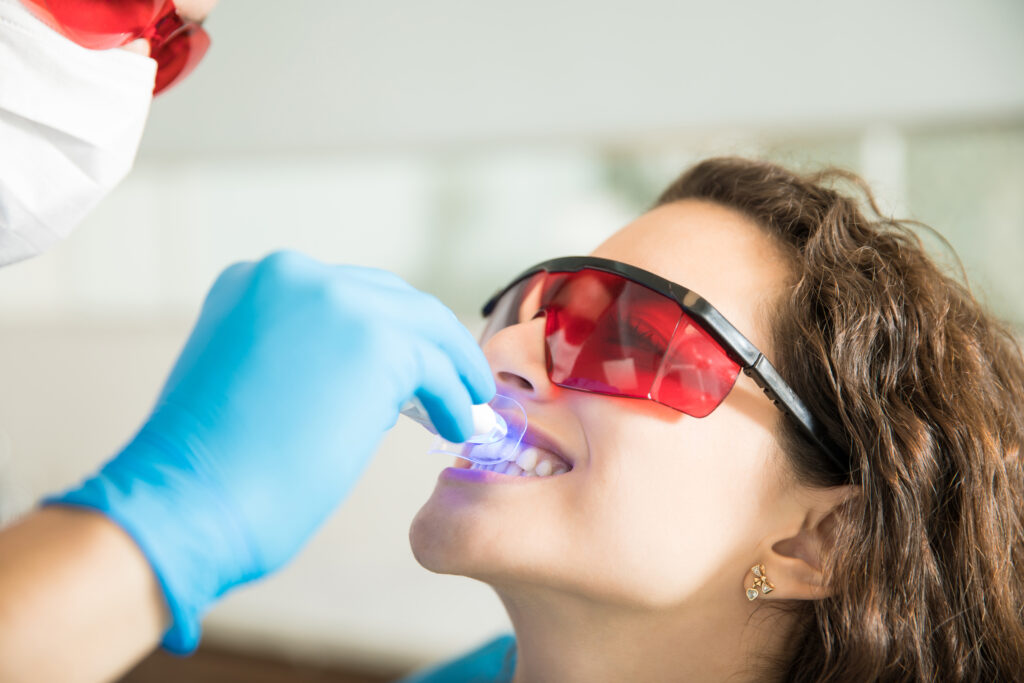
In-office teeth bleaching is the fastest route to a visibly whiter smile. Your dentist protects your gums, applies a professional-strength gel and, where suitable, activates it with a light or laser. Many patients see a clear change in a single visit. Our in-office tooth whitening service suits people who want quick, supervised results before a wedding, an interview or a big event.
At-Home Teeth Bleaching
If you prefer a gradual approach, at-home tooth whitening uses custom-fitted trays made from impressions of your teeth, along with a lower-strength gel worn for short periods each day over one to two weeks. Custom trays hold the gel evenly against your teeth and keep it off your gums, which makes them gentler and more effective than over-the-counter strips. Dentist-supervised at-home teeth bleaching is also a good way to top up your results later.
Laser Teeth Whitening
Laser teeth whitening uses a controlled light source to speed up the action of the bleaching gel. It suits patients who want a fast result with precise control, and our dentists will assess whether it is right for your enamel and your sensitivity level.
What to Expect After Teeth Bleaching
Mild sensitivity or gum tingling for a day or two is common after teeth bleaching and usually settles on its own. To keep your results for longer:
- Limit tea, coffee, cola and red wine for the first few days, and rinse with water after having them.
- Avoid smoking and tobacco, which re-stain teeth quickly.
- Brush twice a day, floss daily and keep up with professional cleaning.
- Ask about touch-up sessions when your shade starts to fade.
Results typically last from several months to a couple of years, depending on your habits. Teeth bleaching is not recommended for children, and pregnant or breastfeeding women are usually advised to wait. Always have a check-up first so that cavities, gum disease or worn enamel are treated before bleaching begins. You can explore every option on our tooth whitening page.
What Are Dental Bridges?
A dental bridge is a fixed restoration that fills the gap left by one or more missing teeth. It consists of an artificial tooth, called a pontic, held in place by crowns on the neighbouring teeth or by dental implants. Unlike removable dentures, dental bridges are cemented in place, so you can eat, speak and smile without worrying about slipping.
Leaving a gap untreated can cause problems over time. Neighbouring teeth may drift into the space, the opposing tooth may move out of position, your bite can become uneven and chewing may become uncomfortable. Dental bridges restore function, protect your bite and bring back the natural shape of your face.
Types of Dental Bridges
- Traditional dental bridges: The pontic is supported by crowns on the teeth on both sides of the gap. This is the most common type.
- Cantilever bridges: The pontic is supported by a crown on only one side. This is used when there is a tooth on just one side of the gap.
- Maryland (resin-bonded) bridges: Wings bond to the back of the adjacent teeth, so less reshaping is needed. These are usually used for front teeth.
- Implant-supported bridges: The bridge is anchored to implants instead of neighbouring teeth. This is a strong option when several teeth are missing. You can read more about dental implants and single and multiple implants on our website.
Materials Used for Bridges
Bridges can be made from porcelain fused to metal, all-porcelain or zirconia. Zirconia and all-porcelain options look the most natural, while metal-based options can add strength for back teeth. Our zirconia and porcelain crowns are shaped and shaded to blend with your neighbouring teeth.
The Dental Bridge Procedure
Getting a dental bridge usually takes two or three visits:
- Examination and planning: X-rays and a check of the supporting teeth and gums.
- Preparation: The supporting teeth are shaped under local anaesthesia, and impressions or scans are taken. A temporary bridge protects the area.
- Fitting: The final bridge is checked for fit, bite and colour, then cemented in place.
Caring for Your Bridge
Clean under the pontic every day with floss threaders, interdental brushes or a water flosser, because food and plaque collect there. Brush twice a day, avoid biting hard objects such as ice, and attend regular check-ups. With good care, many dental bridges last a decade or more. Learn more on our crowns and bridges page.
What Are Veneers?
Veneers are thin, custom-made shells that bond to the front surface of your teeth. They can correct colour, shape, size and minor alignment concerns in a single treatment, which is why veneers are a cornerstone of smile makeovers. If teeth bleaching cannot fix your concern, for example stains that will not lighten, chipped edges, small gaps or slightly uneven teeth, veneers may be the answer.
Porcelain Veneers vs Composite Veneers
Porcelain veneers are made in a dental laboratory. They resist stains, reflect light much like natural enamel and typically last 10 to 15 years with good care. Composite veneers are built directly on the tooth with tooth-coloured resin, often in one visit. They usually cost less and are easier to repair, but they stain and wear sooner than porcelain veneers. The same material is used in our composite fillings.
The Veneers Procedure
- Consultation and smile design: Your dentist listens to your goals, examines your teeth and plans the shape and shade. This is where smile designing and a smile makeover plan come together.
- Preparation: A very thin layer of enamel is usually removed so the veneers sit flush with your natural teeth. This step cannot be reversed, which is why careful planning matters.
- Impressions and temporaries: Impressions or scans go to the laboratory, and temporary veneers may be placed in the meantime.
- Bonding: The final veneers are checked for fit and shade, then bonded with a strong dental adhesive.
Are Veneers Right for You?
Veneers suit healthy teeth and gums with enough enamel for bonding. They are less suitable if you grind your teeth heavily, have active gum disease or have extensive decay, unless those are treated first. If you clench or grind at night, your dentist may recommend a night guard to protect your veneers.
Caring for Your Veneers
Brush gently with a non-abrasive toothpaste, floss daily, avoid biting nails or hard foods, and limit staining drinks. Veneers do not change colour with bleaching, so if you plan to do both, complete your teeth bleaching first and choose your veneer shade to match your new natural shade.
Teeth Bleaching vs Veneers vs Dental Bridges: How to Choose
| Teeth bleaching | Veneers | Dental bridges | |
| Main purpose | Lightens stains | Changes colour, shape and size | Replaces missing teeth |
| Invasiveness | Non-invasive | Minimal enamel removal | Neighbouring teeth reshaped (traditional type) |
| Time needed | One visit (in-office) or 1–2 weeks (at-home) | Two to three visits | Two to three visits |
| Typical lifespan | Months to a couple of years | Often 10–15 years (porcelain) | Many last 10+ years |
Many patients combine treatments. You might begin with teeth bleaching, follow with veneers matched to your new shade, and replace missing teeth with dental bridges or implants. Your dentist will plan a sequence that suits your teeth, your timeline and your budget.
Why Choose Ivory Dental Solutions in Brookfield?
Ivory Dental Solutions is a multi-specialist dental clinic serving AECS Layout, Kundanahalli, ITPL and the wider Brookfield area. Our team includes a maxillofacial prosthodontist and cosmetic dentists, so you can plan teeth bleaching, veneers and dental bridges under one roof. You can meet the team on our doctors’ pages and see the equipment behind your care on our world class technology page. Learn more about Ivory Dental and our patient-centred approach.
Visit us: #575, C Block, AECS Layout, ITPL Main Road, Kundanahalli, Brookfield, Bengaluru, Karnataka 560037
Frequently Asked Questions
- Is teeth bleaching safe?
Yes, when it is done or supervised by a dentist after a proper check-up. Some people feel temporary sensitivity, which usually fades within a few days. Over-the-counter kits used without guidance can irritate gums, so professional teeth bleaching is the safer choice. - How long does teeth bleaching last?
Results vary, but most people enjoy them for several months to a couple of years. Coffee, tea, tobacco and poor oral hygiene shorten this, and touch-ups can refresh your shade. - How long do dental bridges last?
With good hygiene and regular check-ups, many dental bridges last ten years or more. The health of the supporting teeth and gums matters a great deal. - Should I choose dental bridges or an implant?
It depends on your bone, gum health, neighbouring teeth and budget. A bridge is faster and needs no surgery, while an implant replaces the tooth root and does not rely on adjacent teeth. Your dentist can explain both options after an examination. - Do veneers damage your teeth?
Porcelain veneers usually need a thin layer of enamel to be removed, which is permanent. When planned by an experienced dentist, this is minimal, and the veneers protect the tooth surface afterwards. - Can I get teeth bleaching and veneers together?
Yes, but complete teeth bleaching first. Veneers do not lighten, so your dentist will match the veneer shade to your bleached natural teeth. - Can I eat normally with dental bridges and veneers?
Yes. Both are designed for everyday chewing. Avoid biting ice, pen caps or very hard foods, and use a night guard if you grind your teeth. - Where can I get teeth bleaching, dental bridges and veneers near AECS Layout, Brookfield?
Ivory Dental Solutions is at #575, C Block, AECS Layout, ITPL Main Road, Kundanahalli, Brookfield, Bengaluru. You can book an appointment online or call +91 99017 68033.
Final Thoughts
Whether you want brighter shades through teeth bleaching, a natural-looking replacement through dental bridges, or a redesigned smile with veneers, the right plan starts with an examination and an honest conversation. Visit Ivory Dental Solutions, your dental clinic in Brookfield, Bangalore, to find the treatment that fits your smile.
Book your consultation or contact us today.