
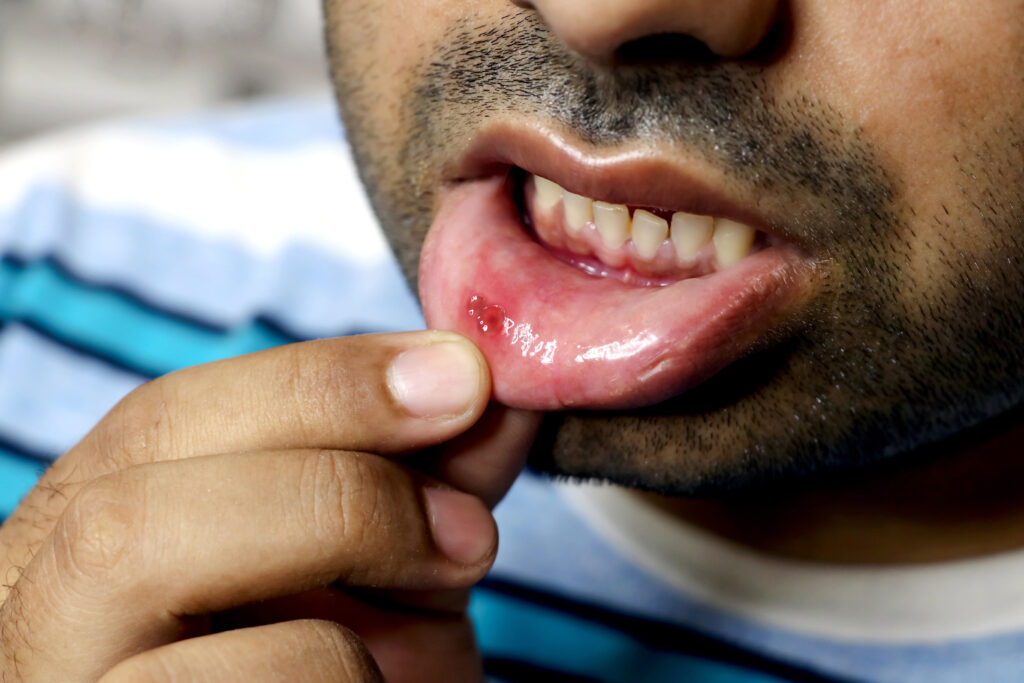
A small, painful sore inside your cheek or under your tongue can make eating, talking, and even brushing your teeth uncomfortable. Mouth ulcers and sores are extremely common, affecting most people at some point, but recurring or unusually painful ulcers can be a sign of an underlying issue that shouldn’t be ignored.
At Ivory Dental Solutions in AECS Layout, ITPL Main Road, Kundanahalli, Brookfield, we regularly see patients seeking relief from mouth ulcers and sores that just won’t heal. This blog explains what causes them, how to manage the pain at home, and when it’s time to visit a dentist for proper evaluation and treatment.
Table of Contents
- What Are Mouth Ulcers and Sores?
- Common Causes of Mouth Ulcers and Sores
- Types of Mouth Ulcers You Should Know About
- How to Tell the Difference Between a Harmless Ulcer and Something Serious
- Home Remedies for Mouth Ulcer Relief
- When to See a Dentist for Mouth Ulcers and Sores
- How Ivory Dental Diagnoses and Treats Mouth Ulcers
- Preventing Recurring Mouth Ulcers
- Frequently Asked Questions
What Are Mouth Ulcers and Sores?
Mouth ulcers, also called canker sores, are small, shallow lesions that develop on the soft tissues inside the mouth — the inner cheeks, lips, tongue, or the base of the gums. They typically appear as round or oval sores with a white or yellowish center and a red, inflamed border.
Unlike cold sores, which are caused by the herpes simplex virus and appear on the outside of the lips, mouth ulcers form inside the mouth and are not contagious. Most heal on their own within one to two weeks, but the pain they cause can significantly affect daily comfort in the meantime.
Common Causes of Mouth Ulcers and Sores
Mouth ulcers and sores can be triggered by a wide range of factors, and often it’s a combination of several at once.
1. Minor Injury or Irritation
Accidentally biting your cheek, aggressive brushing, ill-fitting braces or dentures, or sharp edges on a broken tooth can all cause small sores to develop where the tissue is irritated.
2. Nutritional Deficiencies
Low levels of vitamin B12, folic acid, iron, or zinc are commonly linked to recurring mouth ulcers. If ulcers keep coming back, a nutritional deficiency is worth investigating.
3. Stress and Hormonal Changes
Emotional stress and hormonal fluctuations, particularly around the menstrual cycle, are well-documented triggers for canker sores in many people.
4. Acidic or Spicy Foods
Citrus fruits, tomatoes, and spicy dishes can irritate sensitive oral tissue, either triggering new ulcers or worsening existing ones.
5. Certain Toothpaste Ingredients
Sodium lauryl sulfate (SLS), a foaming agent found in many toothpaste brands, has been linked to an increased frequency of mouth ulcers in some individuals.
6. Underlying Health Conditions
Conditions such as celiac disease, inflammatory bowel disease, and certain autoimmune disorders can present with frequent or severe mouth ulcers as a symptom.
7. Weakened Immune System
Illness, lack of sleep, or a compromised immune system can make the mouth more prone to developing sores, since the body has fewer resources to protect and heal oral tissue.
Types of Mouth Ulcers You Should Know About
Not all mouth ulcers are the same. Recognizing the type can help determine the right approach to treatment.
Minor Ulcers
The most common type, minor ulcers are small, shallow, and typically heal within one to two weeks without scarring.
Major Ulcers
Larger and deeper than minor ulcers, these can take several weeks to heal and may leave scarring. They often require professional evaluation.
Herpetiform Ulcers
These appear as clusters of many tiny, pinpoint-sized ulcers that may merge into one larger, irregularly shaped sore. They are more common in adults and can be particularly painful.
How to Tell the Difference Between a Harmless Ulcer and Something Serious
Most mouth ulcers are harmless and resolve on their own. However, certain characteristics warrant closer attention:
- An ulcer that lasts longer than three weeks without healing
- Ulcers that keep recurring frequently, month after month
- Sores that are unusually large or spreading
- Ulcers accompanied by fever, swollen lymph nodes, or fatigue
- White or red patches near the sore that don’t go away
- Sores that bleed easily or feel hard to the touch
These signs don’t automatically indicate a serious problem, but they do mean it’s time for a professional evaluation rather than continued home treatment.
Home Remedies for Mouth Ulcer Relief
For minor, occasional mouth ulcers and sores, these steps can help manage discomfort while healing occurs naturally:
- Rinse with warm salt water several times a day to reduce inflammation and keep the area clean.
- Avoid acidic, spicy, or rough-textured foods that can further irritate the sore.
- Use an over-the-counter oral gel designed to numb pain and protect the ulcer while eating or talking.
- Switch to an SLS-free toothpaste if you notice a pattern between certain products and ulcer flare-ups.
- Stay hydrated to support healing and maintain healthy saliva flow.
- Apply a cold compress to the outside of the cheek near the sore to help ease discomfort.
- Avoid picking or touching the sore, which can slow healing and increase irritation.
When to See a Dentist for Mouth Ulcers and Sores
While most mouth ulcers heal without professional treatment, you should schedule a dental visit if you notice:
- An ulcer that hasn’t healed after three weeks
- Ulcers that recur frequently or seem to be increasing in severity
- Severe pain that interferes with eating, drinking, or speaking
- Ulcers caused by a sharp tooth, broken filling, or ill-fitting dental appliance
- Any unusual white or red patches accompanying the sore
A dentist can identify the underlying cause, rule out more serious conditions, and recommend targeted treatment rather than leaving you to manage recurring discomfort on your own.
How Ivory Dental Diagnoses and Treats Mouth Ulcers
At Ivory Dental Solutions in AECS Layout, ITPL Main Road, Kundanahalli, Brookfield, we take a thorough approach to evaluating mouth ulcers and sores, especially when they are recurring or unusually persistent.
Detailed Oral Examination
We examine the ulcer’s appearance, location, and surrounding tissue, along with reviewing your dental and medical history to identify possible triggers, including ill-fitting appliances or sharp tooth edges.
Correcting Physical Irritants
If a broken filling, rough tooth surface, or poorly fitted denture or brace is causing repeated irritation, we address the source directly through minor procedures or adjustments.
Palliative and Laser Therapy
For patients with painful or slow-healing ulcers, our laser dentistry services can help reduce pain and accelerate healing with a gentle, minimally invasive approach.
Guidance on Underlying Causes
If we suspect a nutritional deficiency, stress-related trigger, or a possible underlying health condition, we’ll guide you toward the right next steps, including referral for further medical evaluation when appropriate.
Oral Mucous Lesion Care
For ulcers or lesions that don’t follow a typical healing pattern, our general procedures team offers specialized care for oral mucous lesions to ensure nothing is overlooked.
Preventing Recurring Mouth Ulcers
If you experience mouth ulcers and sores frequently, these preventive habits can help reduce how often they occur:
- Use a soft-bristled toothbrush and brush gently to avoid irritating oral tissue
- Choose an SLS-free toothpaste if you notice sensitivity to foaming agents
- Maintain a balanced diet rich in vitamin B12, iron, and folic acid
- Manage stress through regular relaxation techniques or exercise
- Stay well hydrated throughout the day
- Address any sharp teeth, broken fillings, or ill-fitting dental appliances promptly
- Attend regular dental checkups to catch minor irritants before they cause repeated sores
Frequently Asked Questions
- Are mouth ulcers contagious?
No. Unlike cold sores, which are caused by the herpes simplex virus, mouth ulcers are not contagious and cannot be spread through contact. - How long do mouth ulcers usually take to heal?
Most minor mouth ulcers heal within one to two weeks on their own. Larger or major ulcers can take several weeks and may benefit from professional treatment. - Why do I keep getting mouth ulcers?
Recurring ulcers can be linked to nutritional deficiencies, stress, hormonal changes, certain toothpaste ingredients, or an underlying health condition. A dentist can help identify the specific trigger. - Can stress cause mouth ulcers?
Yes. Emotional stress is a well-documented trigger for canker sores in many people, often appearing during particularly busy or high-pressure periods. - When should I worry about a mouth ulcer?
See a dentist if an ulcer lasts longer than three weeks, keeps recurring, is unusually large or painful, or is accompanied by fever, swollen lymph nodes, or unexplained white or red patches. - Can a sharp tooth or broken filling cause mouth ulcers?
Yes. Physical irritation from a sharp tooth edge, broken filling, or ill-fitting denture or brace is a common cause of localized, repeated sores in the same area. - Does Ivory Dental treat mouth ulcers?
Yes. We offer detailed evaluation, correction of physical irritants, and gentle laser therapy for painful or slow-healing ulcers, along with guidance on underlying causes and prevention.
Dealing with Painful Mouth Ulcers That Won’t Heal? Visit Ivory Dental Solutions, #575, C Block, AECS Layout, ITPL Main Road, Kundanahalli, Brookfield, Bengaluru, Karnataka – 560037, or call +91 99017 68033 to get an accurate diagnosis and relief.